

MULTIGROOVE
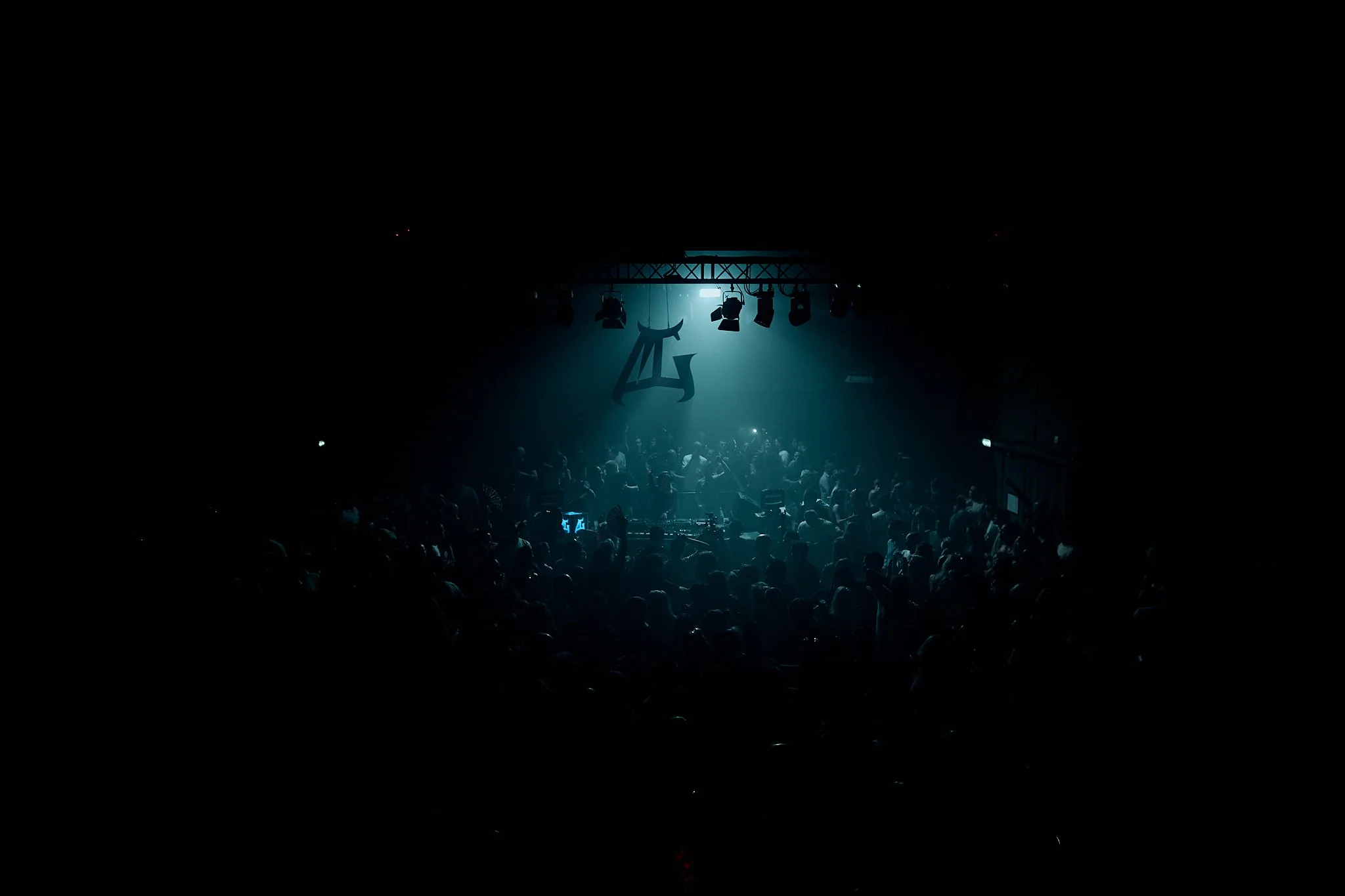
Multigroove was founded by Ilja Reiman in Amsterdam in 1991. The first event took place on 27 July of that year at De Wielingen, opposite the RAI — The Prophet and Buzz on the decks, chill-out room, outside rave yards, light shows. What followed was a series of illegal warehouse raves at the Elementenstraat in Amsterdam's harbour district. The crowd that found its way there was mixed in a way that was unusual for the time: ravers, punks, skaters, artists, people who didn't fit anywhere else. The police shut it down in May 1993 during Operatie Staartjes.
Rather than disappear, Multigroove reorganised. A period of smaller club nights at Pacha kept things moving while Ilja looked for the next step. That turned out to be the Hemkade in Zaandam, a former indoor golf centre with a 24-hour permit and the right kind of space. Multigroove became the venue's operator in 1994 and launched Hellbound there in 1995, a monthly hardcore night that ran consistently for two years.
The late nineties brought a new base: the Rothaanhuis, an old bingo hall on the Rozengracht. No Bullshit launched there, a concept that leaned into the warmth of early nineties rave rather than the peak-gabber hysteria of the time. Pavo, Dana and The Prophet were residents. In hindsight, that sound was an early version of what Q-dance would later name hardstyle. The connection was not incidental. Q-dance built their sound explicitly on what they called "the 1991 feeling" - the Elementenstraat era.
Through the 2000s, Multigroove moved into larger productions at the Borchlandhallen in Amsterdam Zuid-Oost, gave Partyraiser his first major platform, launched Ground Zero as the only Dutch festival with a night permit, and continued to introduce artists who went on to define the harder end of electronic music internationally.
The organisation went through difficult periods. Events were cancelled. Concepts came and went. But Multigroove kept evolving. Through the Westerunie years, through the 2025 outdoor festival cancellation due to flooding at the IJmuiden aan Zee, and into the current run of five active brands: Multigroove, Hellbound, De Samenzwering, Gabberland and Digital Overdose.
Thirty-five years on, the organisation is still independently run and still promoting the genres it started with.
BRANDS

GABBERLAND
HELLBOUND

DE SAMENZWERING
HOUSE RULES
We've spent three decades creating spaces where people can be vulnerable, free, and fully present. That only works when everyone takes responsibility for the energy they bring to the dancefloor. The dance floor is our sanctuary. Help us keep it that way.
Respect the space
Everyone here came to lose themselves in the music. That's the ritual. Don't interrupt someone mid-trance to chat them up. If they're eyes-closed, fully gone, let them be. The dancefloor is for dancing.
no means no
The first time. Every time. A smile doesn't mean they want to talk. Dancing nearby doesn't mean they want to go home with you. If someone walks away, that's your answer. Don't follow. Don't stare for five minutes straight. Give people space to express their limits, then respect them. It's that simple.
look after the tribe
See someone too far gone to take care of themselves? Help them out or find security. Predators don't belong here. If someone tells you they feel unsafe, believe them. Get our crew involved immediately. We'd rather stop a problem early than have someone defend themselves alone.